Guide
What is a CDA in real estate?
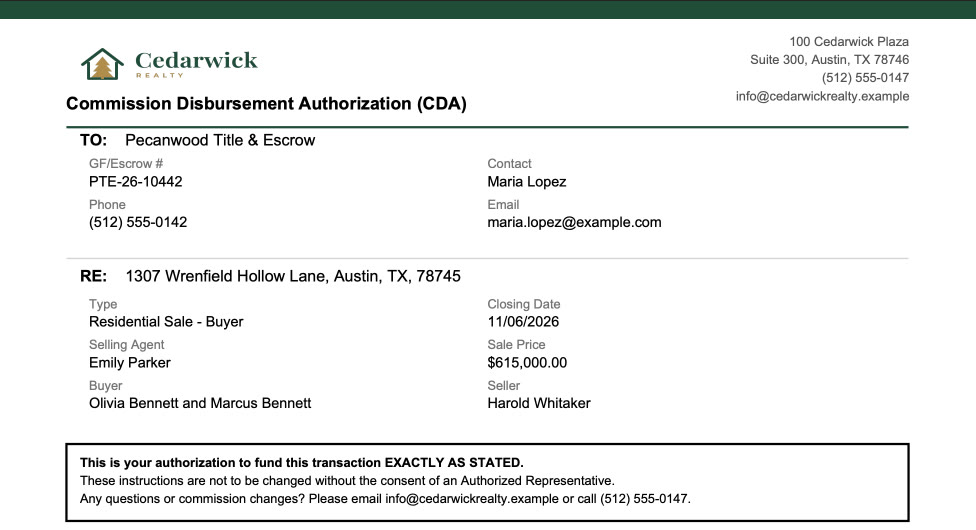
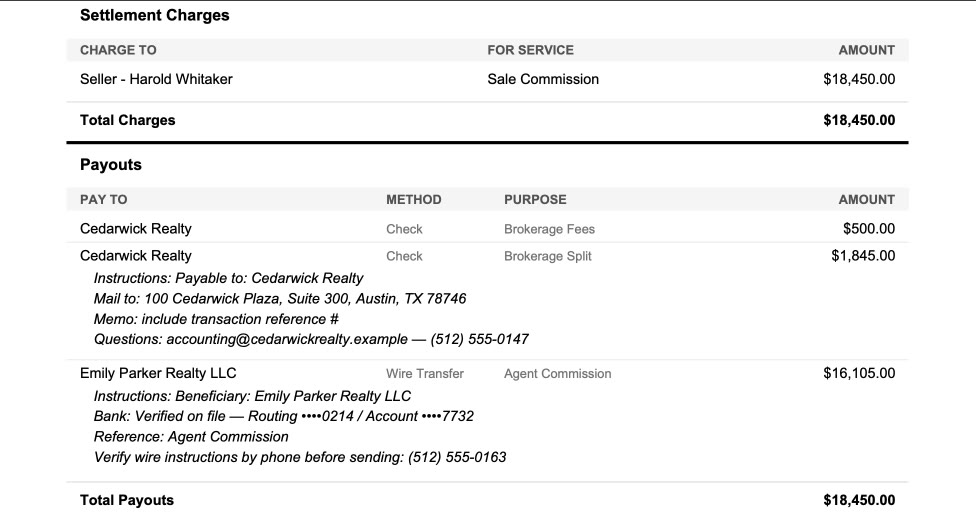
A CDA (Commission Disbursement Authorization) is a document the brokerage sends to the title or escrow company before closing. It tells them exactly how to pay out the commission from the sale: who gets paid, how much each party receives, and where the money goes. The broker signs it to authorize the payout.
Since the 2024 NAR settlement, many brokerages also call it a Compensation Disbursement Authorization. It's the same document.
What's on a CDA
- Property address, closing date, and sale price
- Total commission and how it's calculated
- The split between the brokerage and each agent
- Fees and deductions, such as transaction, franchise, or referral fees
- Each payee, the amount they receive, and payment instructions
- The broker's signature and date
Need a blank one? Download our free, fillable CDA template.
Who prepares and signs it
Usually the brokerage's admin or transaction coordinator prepares the CDA from the deal details. The managing broker reviews and signs it. The agent doesn't sign it, but their payout depends on it being right.
When it's sent
After the deal's paperwork is complete and approved, and before closing. The title company needs it in time to prepare the settlement and cut the checks or send the wires.
How the CDA process works, step by step
- The agent submits the deal and its documents.
- The brokerage checks compliance: every required document is present and signed.
- The commission is calculated from the agent's plan (split, cap, or flat fee).
- The CDA is prepared from those numbers.
- The broker reviews and signs it.
- The CDA goes to the title company.
- At closing, title pays each party as the CDA instructs.
Common mistakes that delay commission payments
- The wrong split, or a cap that was missed
- Fees or referral payouts left off
- Typos in the address, or names that don't match the contract
- Sending it too late for title to process
- Missing documents that hold up the broker's approval
CDA vs. settlement statement vs. commission statement
- CDA
- The brokerage's instructions to title on how to pay the commission.
- Settlement statement / Closing Disclosure
- The title company's or lender's summary of all the money in the transaction, for the buyer and seller.
- Commission statement
- The brokerage's record for the agent of what they earned and were paid.
Not to be confused with a Collateral Desktop Analysis, also called a CDA, which is an appraisal-review tool used by lenders.
Frequently asked questions
Is a CDA required?
There's no single national rule, but most brokerages and title companies require a written, broker-signed authorization before commission is paid out of closing funds. Check with your title company and your state's requirements.
Can an agent be paid directly at closing?
Often, yes. If the brokerage allows it, the CDA can instruct title to pay the agent (or the agent's company) directly at closing. Otherwise title pays the brokerage, and the brokerage pays the agent.
Who keeps a copy of the CDA?
The brokerage keeps it in the transaction file, and the title company keeps it with the closing records. Agents usually receive a copy too.
Can a CDA be changed after it's sent?
Yes, but normally only by the broker issuing a revised, signed CDA. Title companies should confirm any change directly with the brokerage, which also protects against wire fraud.
Does every state use CDAs?
The name and format vary by market and brokerage, but the idea is common across the US: the broker's written instruction to the closing company on how to pay the commission.
How CDAFlow handles CDAs
CDAFlow generates the CDA from the deal and calculates the split from the agent's plan. After approval, the broker or an authorized admin applies the broker's saved e-signature in one click, recorded in the activity log, and the CDA is emailed to title, so agents get paid faster.